
RV roof damage often begins where you cannot see it. A small opening in the sealant may not cause an obvious interior drip, but water can travel through framing, insulation, wiring, flooring, and walls long before the damage becomes visible.
Where Can Water Enter an RV?
An RV roof contains numerous potential entry points, including:
- Roof vents and skylights
- Air-conditioner openings
- Plumbing vents and antennas
- Roof edges and termination points
- Slide-out roofs
- Seams, fasteners, and previously repaired areas
Sealants expand, contract, and age as an RV is exposed to sunlight, moisture, temperature changes, travel vibration, and storage conditions. Small cracks, gaps, voids, or areas of separation can allow water to move beneath the surface.
Real Damage From a Slide-Out Roof Leak
Water entered through the roof of this RV’s slide-out. Once inside, it followed the path of least resistance beneath the finished surfaces and caused extensive deterioration that could not be seen from above.
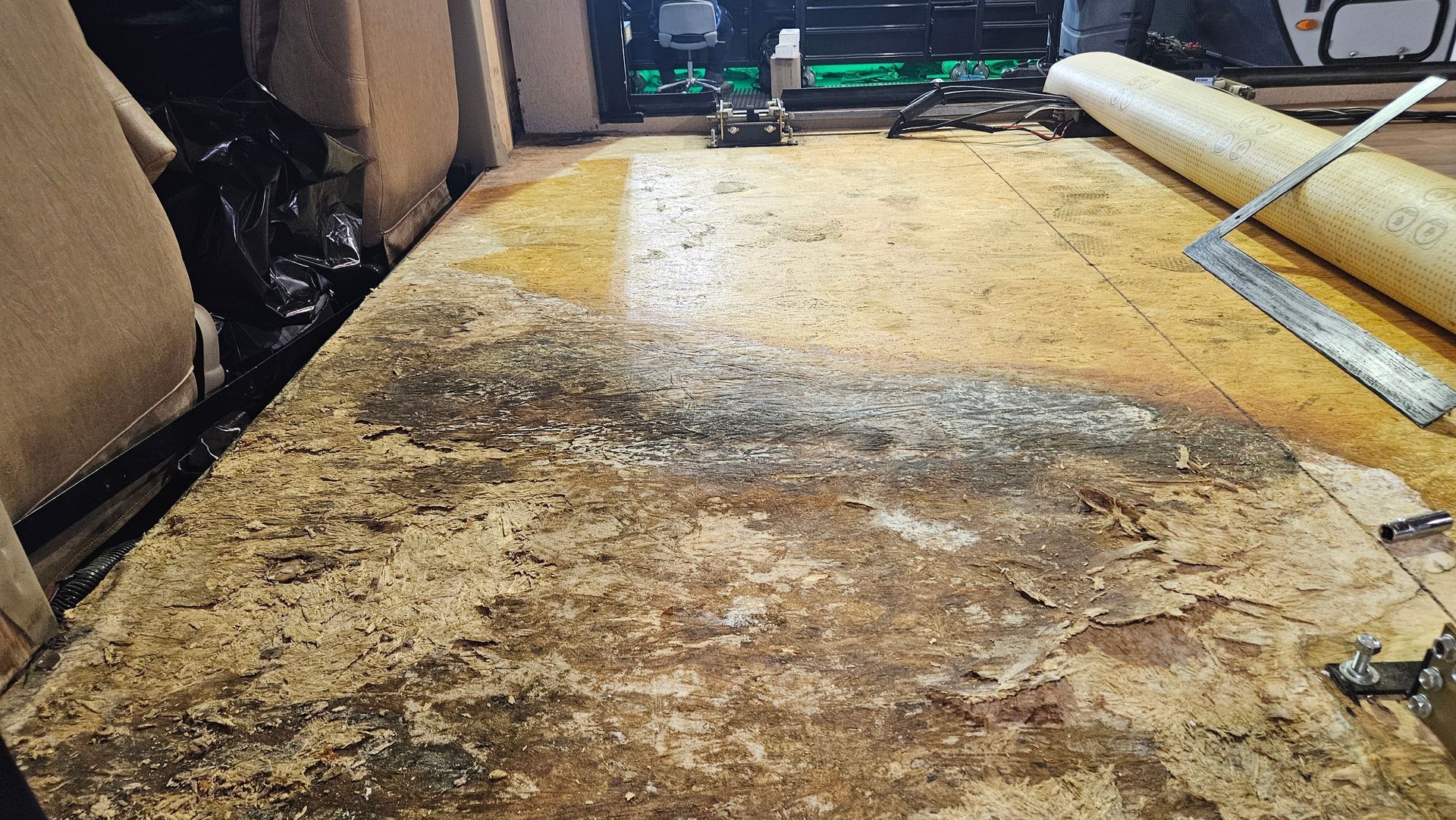
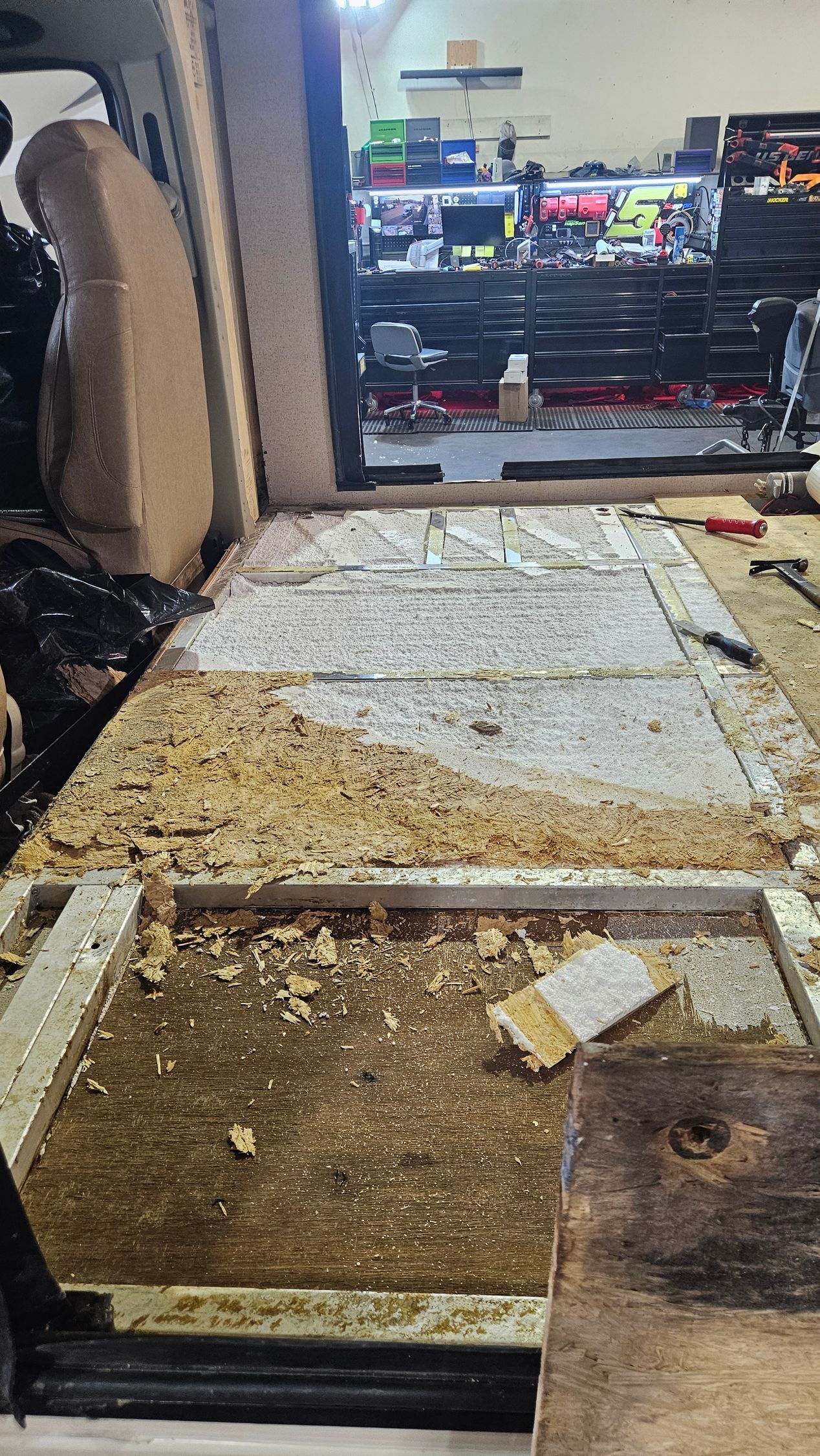
This is exactly what makes RV water intrusion so destructive: damage can remain concealed while the roof decking, subfloor, insulation, wall materials, or structural components continue to deteriorate.
Routine inspection cannot guarantee that an RV will never develop a leak, but finding a vulnerable seal or damaged area early can mean the difference between manageable preventative maintenance and a major structural repair.
Not Every RV Roof Requires the Same Products
“Rubber roof” is often used as a general term, but RVs may have PVC, EPDM rubber, TPO, or another roofing system. Each material has its own cleaning, maintenance, and product-compatibility requirements.
A cleaner, sealant, conditioner, coating, or protectant that is appropriate for one membrane may be unnecessary—or potentially damaging—on another. The roofing material should be identified and the products selected accordingly.
What Our Roof Inspection and Preventative-Care Service Includes
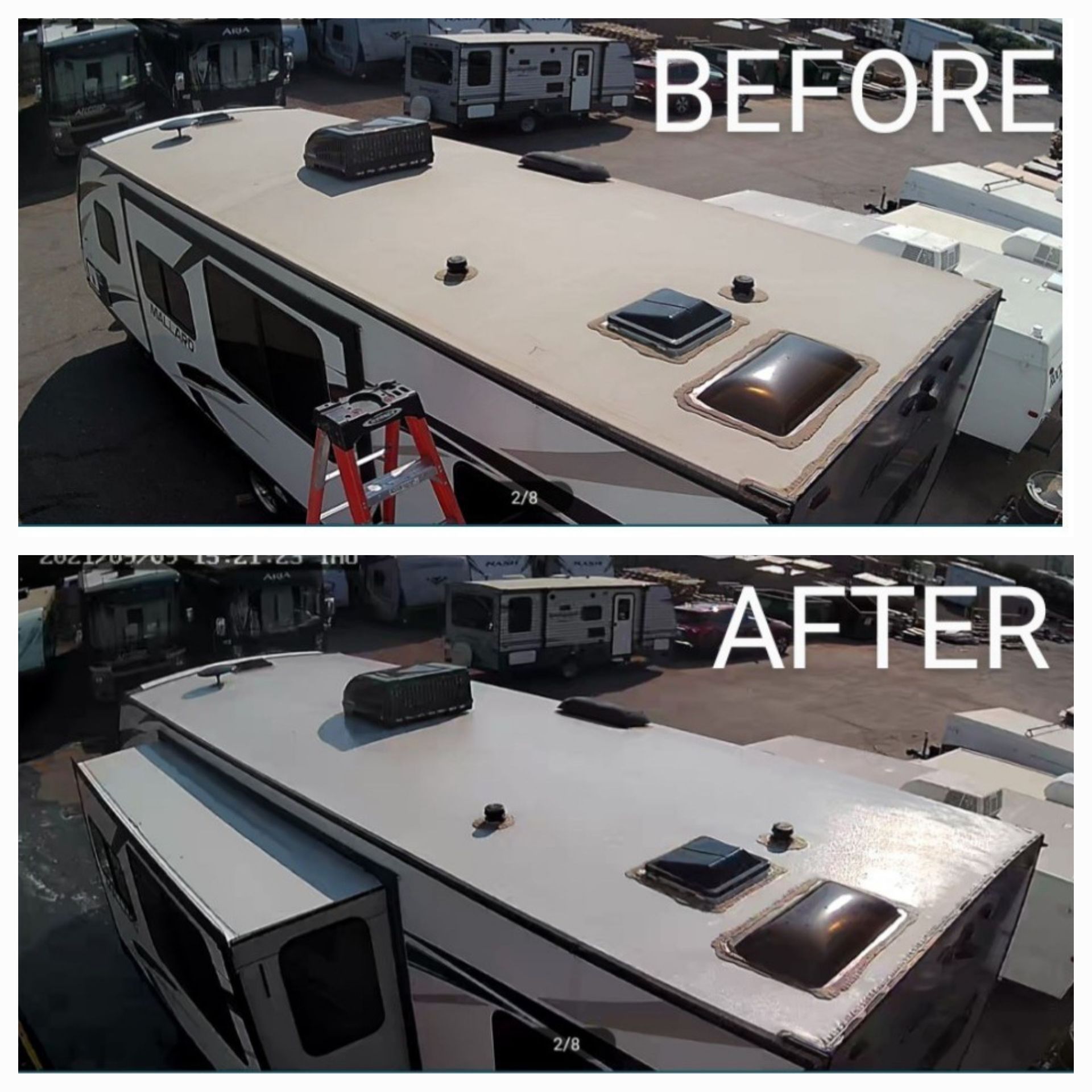
Our technicians perform roof maintenance based on the RV’s roofing material and condition. The service includes:
- Cleaning the PVC or rubber roof using an appropriate method
- Inspecting the roof membrane for visible wear or damage
- Inspecting sealant around roof-mounted components and penetrations
- Checking for cracking, separation, gaps, and voids
- Inspecting roof-edge and side sealants for areas of concern
- Applying an appropriate conditioner or UV protectant when suitable for the roofing material
- Preparing an estimate for additional repairs recommended from the technician’s findings
The inspection allows us to explain which items need immediate attention, which should be monitored, and which are currently in serviceable condition.
Warning Signs RV Owners Should Not Ignore
Call for an inspection if you notice:
- Cracked, lifting, missing, or separated sealant
- Loose sealant around vents, skylights, or roof accessories
- Tears, punctures, bubbles, or exposed areas in the membrane
- Soft spots in the roof or flooring
- Interior stains, discoloration, swelling, or bubbling
- A persistent musty odor
- Water appearing around a slide-out
- Damage after a branch strike, hailstorm, or other impact
- Evidence of a previous repair beginning to fail
Can You Inspect the Roof Yourself?
Owners can look for changes from a safe vantage point, monitor ceilings and walls for staining, and check accessible exterior seams for visible separation.
However, RV roofs can be slippery, may not be designed to support foot traffic, and can be damaged by improper tools, cleaners, or sealants. If you do not know whether the roof is walkable—or which roofing material and products you have—leave the inspection and maintenance to a qualified professional.
Never climb onto a wet roof or rely on an unsecured ladder.
Preventative Maintenance Costs Less Than Hidden Water Damage
A roof-maintenance appointment may uncover an area that needs additional repair. That is not bad news—it is an opportunity to address the problem before water causes greater damage.
Once moisture reaches the decking, subfloor, insulation, cabinetry, or walls, repairs can require extensive disassembly and material replacement. In severe cases, the cost of repairing years of hidden water intrusion may exceed the practical value of the RV.
Schedule RV Roof and Side-Sealant Service in Berthoud
Shop-based service for RVs 19 years old and newer.
We specialize in the house side of RVs and serve Northern Colorado from our Berthoud repair facility.
No mobile or emergency service. Appointments are scheduled by phone.
Call 970-342-6957